
The Archbishop has requested that we ring the bell every day at noon and say this Angelus prayer together
Angelus
God Bless the world
Give it wisdom at this time
Grant us relief and release
Be with those who are ill
And bless the carers fighting this pandemic
For Jesus Christ sake.
Amen

Readings for today
Eucharist
Job 3:1 -19
Psalm 88:1 -7
Luke 9:51 -56
Morning Prayer
Psalm 139
Hosea 4:1-10
Acts 21:1-14
Evening Prayer
Psalms 140, 141, 142
2 Chronicles 30:1-27
Luke 5:12 -26
Tuesday, 29th September 2020
ST MICHAELS AND ALL ANGELS
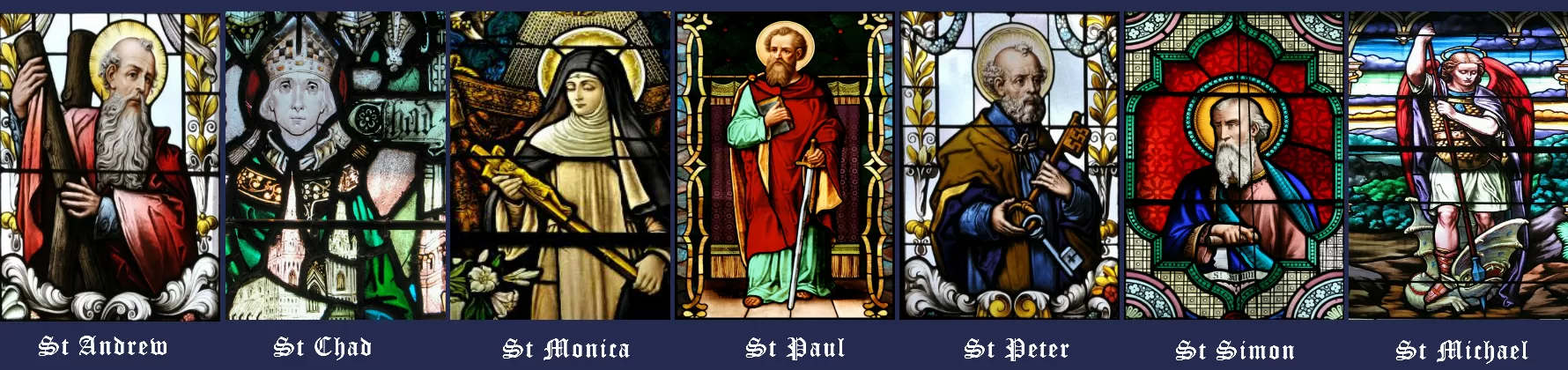
Michael is mentioned four times in the Bible, either as aiding Israel against her enemies or disputing with the devil. These passages have led Christians to see Michael, who is always pictured with a sword in his hand, as the protector of the Church and the patron of soldiers. Today’s festival is a thankful acknowledgement that, while the Christian warfare is not only against human foes, but against cosmic powers, against the authorities and potentates of this dark world’(Ephesians 6:12), yet we also have fighting with us the angels and the archangels and all the company of heaven; and, as in the past, so today their power is strong to defend, for they come from the throne of God.
Collect
Lord God of hosts you created the angels to worship and serve you: grant that as they inspire us in our worship they may also strengthen us in our fight against evil; through Jesus Christ our Lord Amen.
Eucharist Readings:
Job 35:1-7 Psalm 148:1-6 Revelations 12:7 -12 Matthew 18:1-10
Already by this stage in his ministry Jesus had formed a distinct group of followers and had spoken of building ‘his church’. In such a group there was great potential for good, in mutual care and concern, but also for evil, if relationships broke down. The sayings collected in this discourse focus on this theme. They are as relevant to local church life today as they were among Jesus’ Galilean companions.
Any human society is concerned to establish a proper ‘pecking order’, and the gospels record several disputes among the disciples on this subject. Over against all conventional ideas of status and importance Jesus offered the model of the little child. The point was not any supposedly childish qualities of innocence or unselfishness but the status of the child at the bottom of the pecking order, subject to grown-up authority, dependent and powerless. To accept this lower rank (humble himself) is to be great, and to treat the least prominent as the most important is to echo the attitude of Jesus. Such an attitude is not natural, it involves a radical change.
We are responsible for our own spiritual health but also for that of our fellow-disciples, and a quick drowning would be more merciful than the fate deserved by one who hinders one of these little ones. This last phrase refers not primarily to children but to disciples in general, who have just been likened to little children. To recognize one another as little ones, and therefore as vulnerable, is to accept our pastoral responsibility for each other.
There are many lovely characteristics of a child. The power of wonder, the power of forgiveness and to forget, not to hold grudge, the humility and the trust of a child. We must remember the Jews used the world child in a double sense. They used it literally of the young child, but regularly a teacher’s disciples were called his sons or children. Therefore, a child also means a beginner in the faith, one who has just begun to believe, one who is not yet mature and established in the faith, one who has just begun on the right way and who may very easily be deflected from it. In this passage very often, the child means both the young child and the beginner on the Christian way.
Jesus says that whoever receives one such little child in His name receives himself. To receive the child can mean to receive a person who has this childlike quality of humility. It can also mean simply to welcome the child, give them love, care and the teaching which they require to make them into good people. To help a child to live well and to know God better is to help Jesus Christ. This phrase can also have another and wonderful meaning. It can mean to see Christ in the child.
To satisfy the physical needs of a child, to wash their clothes, bind the cuts, soothe the bruises, and cook the meals may often seem a very unromantic task, but there is no one in this world who helps Jesus Christ more than the teacher of a little child. All such will find a glory in the grey, if in the child they sometimes glimpse none other than Jesus himself.