The Archbishop has requested that we ring the bell every day at noon and say this Angelus prayer together
Angelus
God Bless the world
Give it wisdom at this time
Grant us relief and release
Be with those who are ill
And bless the carers fighting this pandemic
For Jesus Christ sake.
Amen

Readings for today
Eucharist
Deuteronomy 8:2-3
Psalm 147:12-20
1 Corinthians 10:16-17
John 6:51-58
Morning Prayer
Psalms 23, 43
Exodus 16 :14-31
1 Corinthians 10:1-17
Evening Prayer
Psalm 81
1 Kings 19:1-8
Luke 24:13-35
Reflections and Readings for the 11 June 2020
Deuteronomy 8 : 2-3 Psalm 147 : 12 -20 1 Corinthians 10: 16 – 17 John 6 : 51 – 58
FEAST OF CORPUS CHRISTI
COMMEMORATION OF THE HOLY COMMUNION
Collect :
God of Grace and Glory
in the Paschal mystery you established
the new covenant of reconciliation
and grafted us into the Body of your Son
our Saviour Jesus Christ:
empower us with his love and make us one
as he prayed that we should be one;
through Jesus Christ our Lord.
Amen
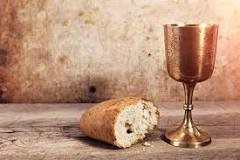
Bread is staple food for much of the world’s population. It is also a metaphor for the food that sustains the life of the human community. Being able to “put bread on the table” is the most basic of desires.
Bread means life. As we reflect on the symbolism of bread, we attend also to the plight of those without bread. While there is sufficient “bread” to satisfy the hunger of everyone on the planet, over two billion people are desperately hungry.
In John 6:51-58, there are allusions to Eucharist as both meal and sacrifice. Jesus is the manna or bread from heaven. Life comes from eating his flesh/body. It also comes from drinking his blood. For the ancient Israelites, the life was in the blood. Blood poured out, is life poured out. To drink the wine/blood is to participate in the life of Christ poured out.
The flesh and blood of Jesus were given for the life of the world, for you and me. Jesus gave his life, motivated and empowered by love for humanity. He poured out his love, as he poured out his blood, indiscriminately, loving without counting the cost.
Christ’s hope, was that the world might become alive. Jesus life demonstrates to us a life of love. When we live a life without love, does it qualify to be called life? He hoped that, his innocent and brutal death, would make clear both the depth of his own love, and the brutality to which life without love inevitably leads.
Through eating the flesh and drinking the blood of Jesus, we his believers, accept being so transformed, as to love the world with the same love that led to his crucifixion – the love that he in turn had learnt from his Father. Union with Jesus in love moves beyond private dialogue and the comfort of intimacy, it becomes a dedication of total self-sacrifice, compassion, justice and forgiveness. Our transformation should be of such a commitment, like that of Jesus, free, life-giving and joyful.At this time however, very few of us can actually participate in a Eucharistic celebration. We can take time to pray, to reflect on the Word and on the meaning of Eucharist. We can be part of spiritual communion. While we reflect on this mystery, may our faith in action be designed to address the issue of global hunger and the circumstances that prevent access to “bread” for all. The feast of the Body and Blood of Christ invites us to a careful consumption of the world’s resources, so that all God’s people and all God’s creatures may have life.
We pray the prayer used during spiritual communion :
Soul of Christ, sanctify me
Body of Christ, save me.
Blood of Christ, refresh me.
Water from the side of Christ, wash me.
Passion of Christ, strengthen me.
O good Jesus, hear me.
Within your wounds hide me.
Let me never be separated from you.
From the malicious enemy defend me.
In the hour of my death call me.
and bid me come to Thee.
That with Thy Saints I may praise Thee.
Forever and ever.
Amen
As we thank God for his Son, the bread of eternal life, we listen and we thank God for life. We begin to look at ways that we can be love and bring love to all people.