The Archbishop has requested that we ring the bell every day at noon and say this Angelus prayer together
Angelus
God Bless the world
Give it wisdom at this time
Grant us relief and release
Be with those who are ill
And bless the carers fighting this pandemic
For Jesus Christ sake.
Amen

Readings for today
Eucharist
Ecclesiastlcus 48 :1 -14
Psalm 97
Matthew 6:7-15
Morning Prayer
Psalm 31
Numbers 12:1-16
Romans 2:12-24
Evening Prayer
Psalms 32, 33
1 Samuel 2:27-36
Matthew 18:10-20
Reflections and Reading for Thursday, 18 June 2020
Today we commemorate and celebrate the life of :
Bernard Mizeki, Martyr in Mashonaland, 1896
Bernard Mizeki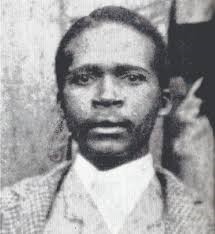
Originally, from Mozambique, Bernard came to Cape Town for work, and there was converted to Christ by the Cowley Fathers of Chapel Street, Bishop Knight Bruce asked him to accompany him to Zimbabwe (then known as Rhodesia) where a new Diocese had recently been formed. There he settled as a catechist in Marendellas, preaching the gospel to the Shona people. The success of the missionaries aroused opposition, especially when Bernard successfully nursed his first Shona convert, Shoniwa, through an illness against the wishes of his mother. Pressure which colonialism imposed on African society found local expression, when a bad harvest gave Bernard’s enemies their opportunity and they were quick to blame the Christians for the disaster. One night, Bernard was attacked in his hut and left for dead. With his wife’s help he managed to crawl into hiding in the bush, where for five nights she secretly cared for him – but in vain. On the fifth night she found him dead. His widow told how, like the first Christian martyr St Stephen, he was strengthened in his last hours by a vision of the risen Christ. Though Bernard died alone, the many churches dedicated in his memory confirm our Lord’s words. ‘A grain of wheat remains a solitary grain unless it falls into the ground and dies; but if it dies, it bears a rich harvest” (John 12:24)
(Saints and Seasons, ACSA)
Let us Pray :
Lord of all nations
by the conversion of Bernard Mizeki
you raised up from the people of Africa
a missionary faithful to death:
Fill your people with love
in the face of hatred and fear
and make us ready to live or die
for the name of Jesus;
who is alive and reigns with you and the Holy Spirit
One God now and forever.
Amen
Ecclesiasticus 48 : 1 – 14 Psalm 97 Matthew 6 : 7 – 15
Jesus offers us a model of prayer in the Our Father. The prayer begins with a focus on God. Many times our prayers focus on me, beginning with my situation, my wants, my perceptions and my needs. We need to take time in prayer to see how we might better allow God, to be God.
There are two versions of the Our Father; the one we read in the Gospel of Luke chapter 11:1 – 4 and the second is from Matthew 6 : 7-13, the Gospel reading for today. In Luke, the Our Father is shorter. Luke writes for the communities which came from Paganism. In Matthew the Our Father is found in the Discourse on the Mountain.
Jesus criticizes the people for whom prayer was a repetition of a magic formula, where strong words are used to coerce God to respond to our needs. The receiving of our prayer by God does not depend on the repetition of words, but on God’s goodness, on God, who is love and mercy. God knows our needs even before we pray to Him.
The first words of the prayer begin with, “Our Father”, “Abba Father”, it is the name which Jesus uses to address God. It reveals the new relationship with God that should characterize the life of all communities. In Romans 8: 15 – 16 we read: ‘For you did not receive a spirit that makes you a slave again to fear, but that you receive the spirit of sonship, And by him we cry “Abba, Father “ The Spirit himself testifies with our spirit that we are God’s children”.
We say Our Father and not My Father. The adjective places the accent on the awareness that we all belong to the great human family, a family of all races and creeds. To pray to the Father is to enter into intimacy with God. It calls us to be sensitive to the cry of all our brothers and sisters, who cry for their daily bread. It calls us to an awareness of the needs of this world. We are called to participate. It means to seek in the first place, the Kingdom of God. We experience God as our Father, our Creator, the foundation of a universal community.
The Name – Our Father, the Kingdom, the Will. In the first part we are requesting that our relationship with God may be re-established again.
The coming of the Kingdom is the fulfilment of all the hopes and promises. It is life in abundance, the overcoming of frustration and suffering with human kings and governments. This Kingdom will come when the Will of God is fully accomplished. To do His will, the will of God is expressed in His Law. His will be done on earth as it is in Heaven. The observance of the law of God will be a source of order and well-being for human life. As we experience God, we know His peace.
In the second part of the prayer, we ask that the relationship among persons may be restored. It is to transform or change the structures of the community and society in order that all the sons and daughters of God may share the same dignity.
Our daily bread: Jesus invites us to live a new Exodus, a new fraternal way of living together – sharing – and this will guarantee daily bread for all. Forgive us our debts: Every 50 years, the Jubilee Year obliged people to forgive their debts. It is a new beginning ! Jesus announces a new Jubilee Year, a year of grace from the Lord.
Do not lead us into temptation: do not put us to the test: In Exodus, people were tempted and fell. The people complained and wanted to go back (Exodus 16:3; 17:3). In the new Exodus, the temptation will be overcome by the strength which people receive from God.
Deliver us from evil : Evil draws away from God and is a cause of much pain, greed and heart ache.
Anyone who does not forgive will not be forgiven. In praying the Our Father, we pronounce the phrase which condemns us or forgives us. We say: “Forgive our trespasses as we forgive those who trespass against us”. We offer to God the measure of mercy that we want.
Let us Pray :
Lord God,
You speak Your mighty word to us,
but we cannot hear it
unless it stirs our lives
and is spoken in human terms.
Open our hearts to it,
that it may bear fruit in us
when we do Your will
and carry out what we are sent to do.
We ask You this through Your living Word,
Jesus Christ our Lord.
Amen
Pray The Our Father slowly today, pondering a word here and there. Say it aloud let each word, each phrase, be a way of deepening your awareness of God in your life.